
A Small Living Room Layout for Real Evenings at Home
By At Home with Alice Editorial · Published · Updated · 4 min read
Make a compact living room work for reading, conversation and occasional overnight visitors. Start with walking routes, test furniture positions and spend on useful proportions before adding another clever storage piece to a crowded room.
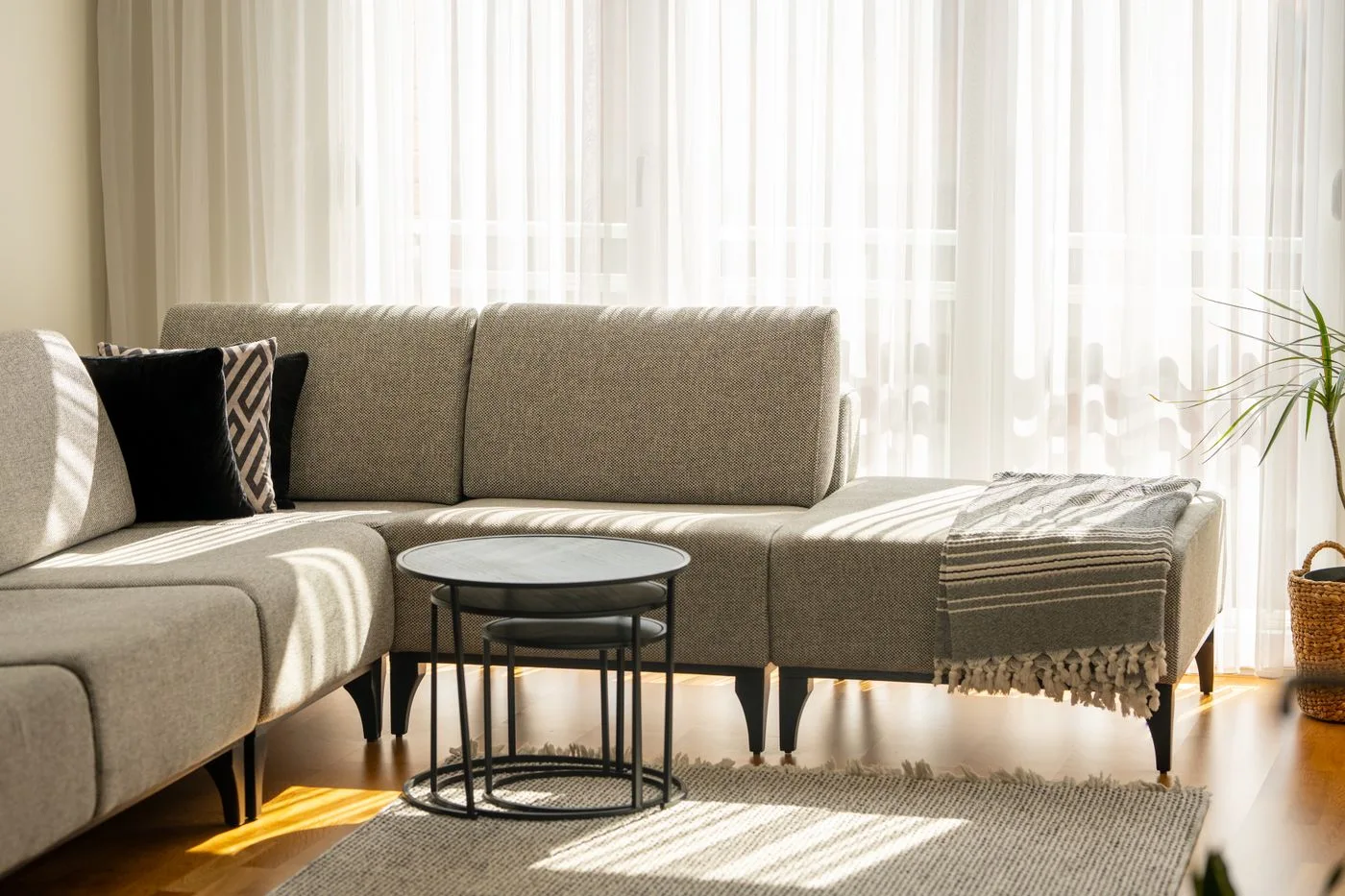
Imagine arriving home with a shopping bag, taking off a coat and trying to reach the sofa without moving a chair. A living room can look spacious in a photograph while being awkward for this ordinary journey. Good layout begins with the routes you use, then makes room for the activities that matter most.
The practical verdict: keep the main walking route clear, choose furniture for its usable footprint and give each regular seat somewhere to put a drink. A smaller sofa is not always the first or best answer.
Draw the room you have
Measure walls, doors, radiators and awkward recesses. Add the space required for doors and cupboards to open. Mark sockets and the television connection if it matters. Draw the furniture you own to the same scale, including the depth of a recliner when open rather than only its closed footprint.
Sketch two alternatives before moving anything heavy. One can favour conversation; the other can favour the television or a view. Use masking tape to indicate a potential table footprint, provided the floor tolerates it. Walk around carrying laundry or a tray. The test is whether the route feels comfortable, not whether the diagram looks symmetrical.
Decide what happens every day
If two people use the room nightly and visitors come monthly, do not let permanent seating for six consume the floor. An occasional chair from another room may serve the less frequent situation. Conversely, if the room regularly hosts family conversations, arranging every seat towards a screen can work against its main purpose.
| Daily priority | Layout to try | Watch for |
|---|---|---|
| Television and relaxed evenings | Sofa facing the screen | Window glare and a clear exit route |
| Conversation | Sofa with an angled chair | A table reachable from both seats |
| Living and work space | A desk along a quieter wall | Desk chair clearance at the doorway |
Question the coffee table before the sofa
A deep central table can take up the most useful patch of floor. Try removing it for a week and using a side table instead. If you miss a place for games or shared snacks, a compact central table may earn its position. Nesting tables offer flexibility only when there is somewhere sensible to put the smaller pieces.
Furniture raised on legs can reveal more floor, although that visual effect does not change physical space. Prioritise a comfortable seat over a delicate outline that is unpleasant for a full evening. Measure arm widths as well as the overall sofa: broad arms may use space without adding seating. Check delivery access before ordering a replacement.
Let storage follow a specific problem
Gather the objects that need homes: games, blankets, cables, books or children's materials. Measure the largest items and choose storage that fits. A beautiful shallow cabinet will not solve the problem of a bulky board game. Closed storage can quiet a busy room; open shelves suit objects that are attractive or frequently reached.
Place storage near the activity it supports. A blanket basket beside the sofa is easier to maintain than a cupboard across the flat. Leave some empty capacity so tidying does not require a puzzle every evening. For another compact-space project, see our small hallway guide.
Budget priorities and purchases to skip
Spend first on furniture that improves a repeated inconvenience, such as a supportive main seat or correctly sized side table. Buy storage after editing what it will hold. Lighting often improves the evening atmosphere with less disruption than replacing several large pieces, particularly when one overhead fitting is doing every job.
Skip oversized chairs chosen only for occasional guests. Avoid buying several tiny tables because each looks compact online; together they create an obstacle course. A storage ottoman needs opening space and a plan for items placed on top. Every multipurpose piece has a compromise, so choose the one that suits your routine.
Common layout questions
Must the sofa sit against a wall?
No, but floating it needs a reason and clear space around it. Try both positions before assuming either makes the room larger.
Should I use a small rug?
Choose the rug in relation to the seating group. Mark its dimensions first; a tiny rug stranded beneath a table can make furniture feel disconnected.
When is the layout finished?
Live with it through a normal week. If seats, storage and routes work without daily rearranging, add decorative layers slowly.
Explore the options
Use these retailer categories to compare dimensions, materials, care instructions and current prices. These are ordinary outbound links.