
Make Room for Gentle Movement at Home
By At Home with Alice Editorial · Published · Updated · 4 min read
A practical guide to clearing a usable space, choosing activities you already understand and avoiding equipment that becomes clutter. Build movement into the room and routine you have, with purchases kept optional and purposeful throughout.
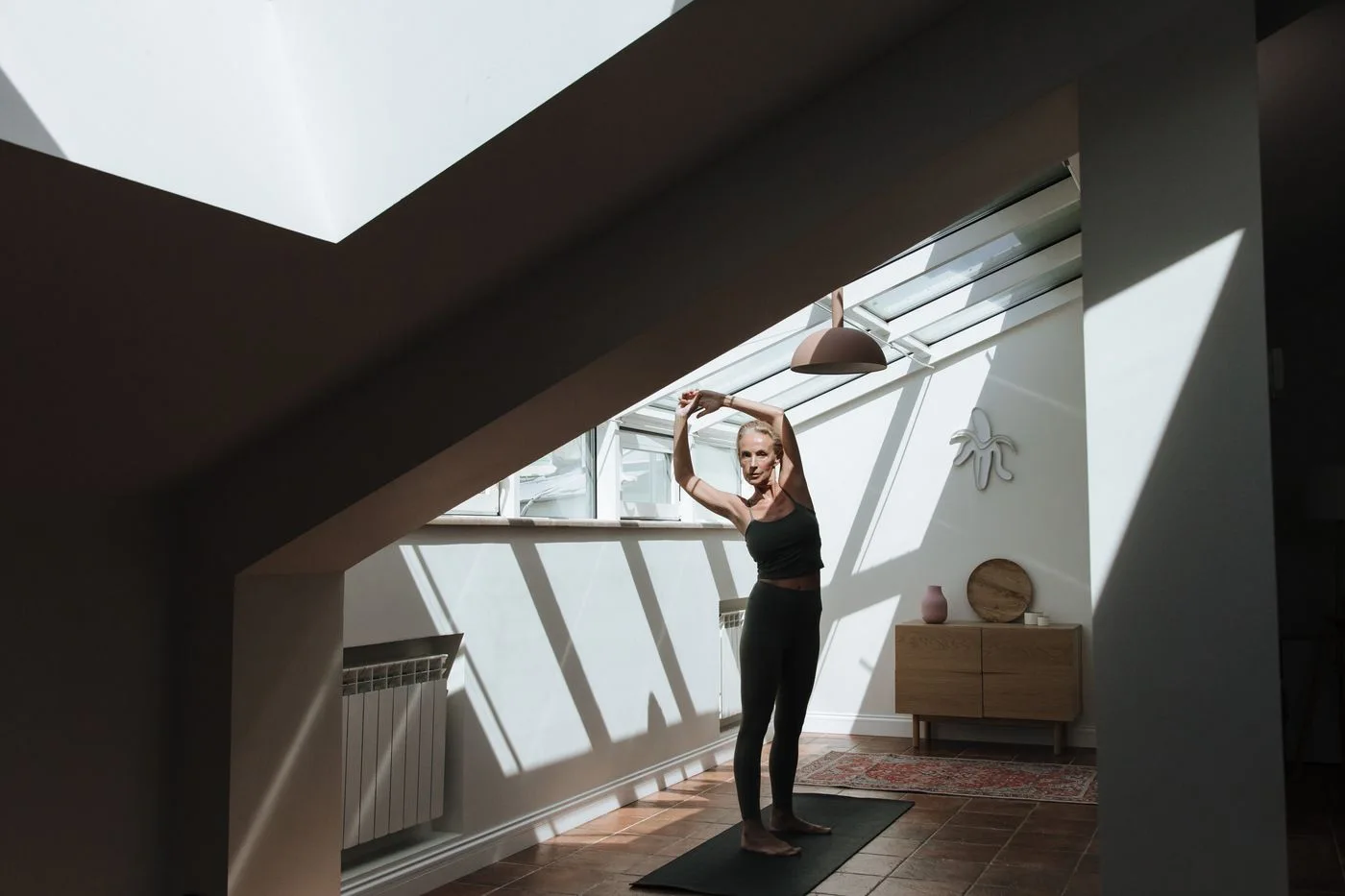
A living room does not need to become a studio to make space for movement. Often the first useful step is moving a footstool, putting shoes in a predictable place or choosing a moment when the room is free. A home arrangement should make an appropriate activity easier to begin without requiring a complete equipment collection.
The NHS recommends breaking up long periods of sitting with activity. It also advises speaking to a GP first if you have not exercised for some time or have medical conditions or concerns. See its adult physical activity guidance for the wider recommendations. This article covers the room and shopping decisions, not an individual exercise programme.
Choose the activity before the accessories
Think about an activity you already know how to do comfortably and appropriately. That could involve a familiar guided session, moving to music or leaving the house for a walk. You do not have to choose floor-based exercise merely because a mat looks attractive beside the sofa.
If you are learning a new activity, choose suitable instruction rather than improvising from a product picture. A household guide cannot tell you which movements are appropriate for an injury, pregnancy or medical condition. Getting the right guidance is more useful than buying equipment first and hoping to find a purpose for it later.
Check the space in use
Move small objects and check the floor where you intend to stand or move. Look for loose rugs, trailing leads, fragile items and low furniture edges. Allow for the movements involved, not only the space occupied when you are standing still. Keep the route to the door clear and consider who else may enter the room.
A shared household needs a simple signal that the area is in use. Agree a time, put away toys and keep pets away from equipment as appropriate. If moving furniture is difficult, choose a different activity or location rather than building a routine around an awkward daily rearrangement.
Give the activity a practical cue
Connect it to an existing part of the day, such as finishing a work task or returning home. The cue should be specific enough to remember and flexible enough to survive a changed schedule. “When I close the laptop” is easier to recognise than “when the day becomes calm”.
Prepare only the items you need. Place suitable clothing or shoes where you can reach them, keep any instructions available and decide where equipment returns afterwards. The aim is to remove unnecessary setup. There is no need to track every session or turn a pleasant activity into a complicated performance record.
What equipment earns its place?
| Item | Useful question | Reason to wait |
|---|---|---|
| Exercise mat | Does the chosen activity require one suitable for this floor? | Your activity does not use the floor |
| Equipment basket | Does it keep existing items accessible and safely stored? | You have no equipment to organise |
| Resistance equipment | Do you have appropriate instruction for its use? | You are buying it without a planned activity |
| Speaker or screen stand | Can you follow the guidance without an awkward setup? | An existing stable arrangement works |
For a mat, read intended-use information, dimensions, material and care instructions. Thickness alone does not describe every useful quality. For equipment, check the manufacturer's inspection and storage guidance and replace damaged items as instructed. Buying several resistance levels or accessories at once can create storage problems before you know what you will use.
Keep the room a room
Store items close enough to retrieve easily without leaving them across walkways. A mat might fit vertically in a cupboard; small equipment may belong on a low shelf. Avoid hanging heavy items from decorative hooks or furniture that was not designed for the load. Check wall fixings and product instructions if you install storage.
If the setup takes longer than the activity, simplify it. Leave decorative furniture in place and choose a workable clear area elsewhere. A room that supports several everyday uses is often more valuable than one organised around a routine that rarely happens.
Frequently asked questions
Do I need a large clear floor?
It depends on the activity. Choose appropriate guidance and check its space requirements. Do not squeeze a movement into an area that does not safely accommodate it.
Is a more expensive mat automatically better?
No. Intended use, floor compatibility, dimensions and care matter. Compare those details rather than relying on price or colour.
What if the planned time never works?
Change the cue or the location. The household arrangement should support your chosen activity, rather than becoming another obstacle to beginning.
Sources & further reading
Manufacturer and public guidance checked 11 October 2026. Check individual product information before purchasing.