
Storage Baskets That Make Everyday Tidying Easier
By At Home with Alice Editorial · Published · Updated · 5 min read
Choose useful storage baskets around the things you actually put away. This practical guide compares open, lidded and washable options, with measuring advice for shelves, shared rooms and the everyday clutter that keeps coming back.
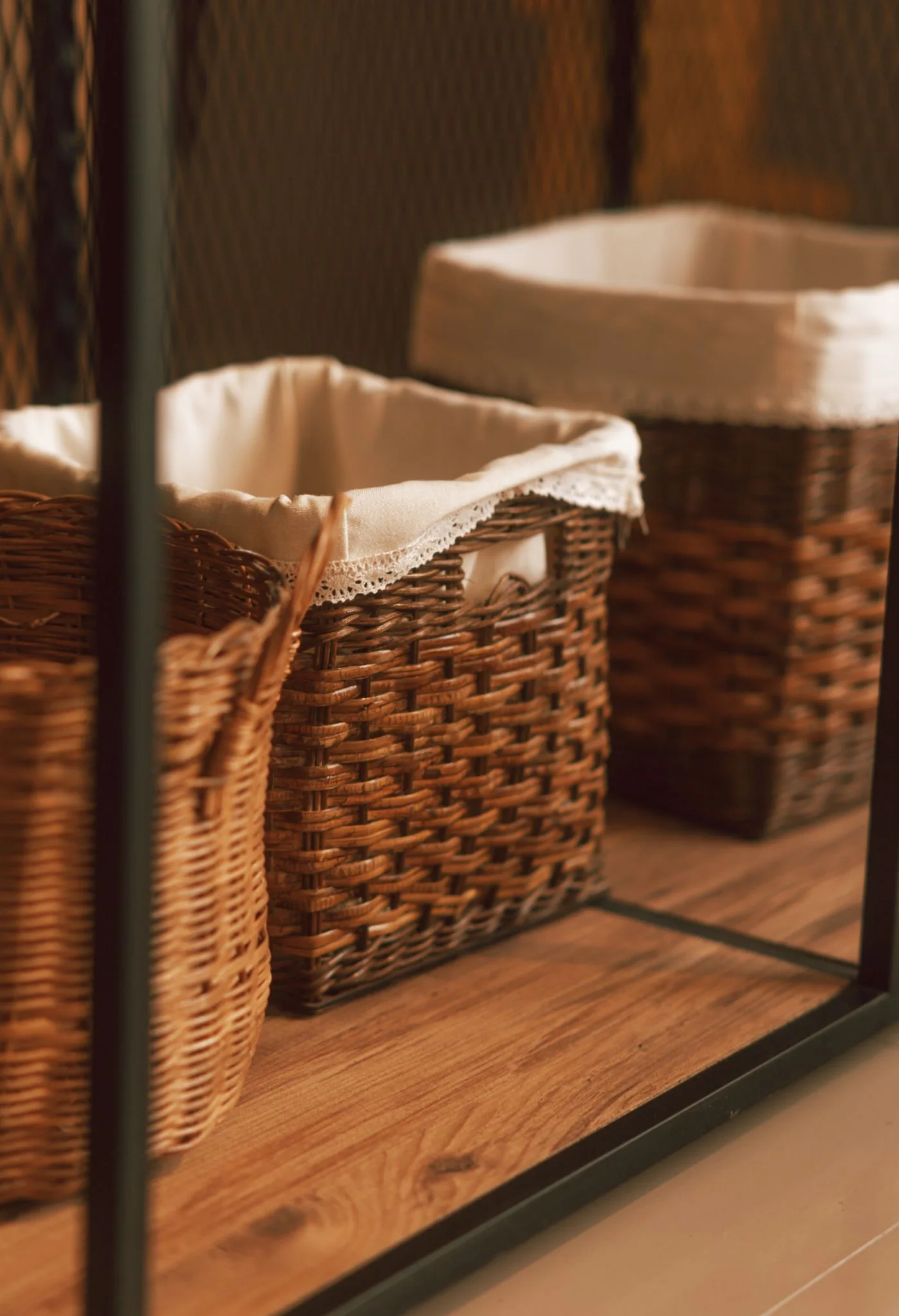
A basket beside the sofa can be a useful home for a blanket, a book and the charger that otherwise disappears between cushions. The same basket can become an awkward obstacle if its handles catch on the coffee table or it is too deep to see what is inside. Good storage starts with the objects and the routine, rather than a matching set bought before measuring.
Our buying verdict: choose a broad open basket for things used daily, a structured container for a shelf, and a washable option where spills are likely. These are scenario-based recommendations, not results from hands-on product testing. A beautiful material is a bonus once access, fit and care work for your household.
Give each basket one clear job
Look at a recurring pile before shopping. Is it clean laundry waiting to go upstairs, children's drawing materials, or parcels that need returning? Those are different jobs. Laundry needs a comfortable way to carry a bulky load. Paperwork needs enough structure to stop corners bending. A basket of mixed belongings needs a regular emptying routine more than it needs a prettier lid.
Write down what belongs in the container and where it will be emptied. A basket near the entrance might hold scarves and gloves, while keys stay in a shallow dish. Keeping small valuables separate avoids digging through soft layers on the way out. Avoid assigning a single enormous basket to every object without a home.
Match the construction to the room
| Daily situation | Useful starting point | Tradeoff to check |
|---|---|---|
| Throws beside a sofa | Wide open basket | Floor space and snagging |
| Open shelving | Straight-sided structured box | Handles can reduce usable width |
| Craft materials | Wipeable container with compartments | Small items need separate inserts |
| Occasional seasonal storage | Lidded box | Less convenient for daily access |
Woven baskets bring texture to a room, but inspect the inside as carefully as the outside. An uneven weave can catch a fine scarf. A smooth removable liner may help, provided its care instructions suit the contents. IKEA's FLÅDIS listing identifies seagrass as the material; that description does not mean every woven basket tolerates the same cleaning method.
Fabric baskets can be easy to tuck into a wardrobe, although some lose their shape when only partly filled. Rigid containers tend to stack more predictably, but a stack should remain stable and easy to reach. Never assume a decorative handle is intended to carry a full load unless the product information supports that use.
Measure the route as well as the shelf
Measure the narrowest opening, usable depth and clearance above the basket. Allow room for fingers and for the lid to open. A tapered basket's widest point may be its rim, while its base provides less room for the objects inside. Compare external dimensions with internal capacity instead of treating them as interchangeable.
For a hallway, mark the proposed footprint with paper and walk past it carrying a shopping bag. Check cupboard doors, radiator access and the route used at night. In a bedroom, a basket that looks modest online may interfere with a drawer opening. These small checks are more useful than choosing an extra-large size just in case.
Pros, limitations and when to skip
Open baskets: quick to use and easy to inspect, but they leave contents visible and collect dust. Lidded baskets: create a quieter-looking shelf, but introduce an extra step every time something goes away. Soft baskets: can suit lightweight textiles, but may be frustrating for paperwork or objects that need an upright position.
Skip decorative floor storage if the room already lacks clear walking space. Consider a drawer divider or an existing cupboard shelf first. Also skip a basket that would conceal damp laundry or unfinished food: the need is a suitable laundry or food-storage system, not an attractive container with unclear care instructions.
What not to overpay for
Matching labels, elaborate lids and several coordinated sizes do not solve an uncertain storage plan. Start with one container in the most troublesome location. Live with its position before repeating it elsewhere. Spend on smooth edges, comfortable carrying and a dependable fit; save on decorative details hidden inside a wardrobe.
Care and the weekly reset
Follow the actual label, remove contents before cleaning and let any permitted damp-cleaned surfaces dry before refilling. Check the underside for trapped grit on delicate flooring. A short weekly reset keeps a basket from becoming permanent overflow: return borrowed objects, recycle unwanted paper and leave enough space for the things it is meant to hold.
Questions before ordering
Should every basket match?
Matching can make open shelving feel calmer, but similar colour or height is usually enough. Different jobs may deserve different construction. Function matters more than buying the whole range.
Is a lid better for a busy family room?
Only if people will use it. An open basket may support a quicker evening tidy. Choose a lid when dust protection or visual privacy outweighs that extra step.
For another purchase where dimensions matter more than appearances, read our guide to choosing table lamps. If you are shopping for someone else's home, the housewarming gift guide explains why flexible, easy-to-store presents often make sense.
Explore the options
Use these retailer categories to compare dimensions, materials, care instructions and current prices. These are ordinary outbound links.
Sources & further reading
Manufacturer and public guidance checked 11 October 2026. Check individual product information before purchasing.